

A student spends three months building an AI chatbot.
They define the problem, write the code, test for errors, redesign the conversation flow, present the final product and write a reflection on what they would do differently.
What does the school record?
In most cases: AI Chatbot Project.
Maybe a grade. Maybe a line in a report card. Maybe a certificate of participation.
But the project itself generated genuine evidence of at least six distinct capabilities. None of them appear in the official record. And when that student applies to a university or an internship three years later, they will have to reconstruct the story from memory.
This is the gap between how schools recognise learning and how the rest of the world understands it — and it is a gap that structured skill alignment can help close.
The full journey from project to opportunity
The pathway from a school project to a career opportunity has more steps than most records acknowledge:
Project → Evidence → Skill → Skill taxonomy → Credential → Learner record → Career opportunity
Each step matters. And most current student records stop after the first two.
Step 1: The project
The AI chatbot project is the learning activity. It is where the student spends their time, applies their thinking and produces something real.
Projects are valuable because they generate evidence of capability in context — not a test of recall, but a demonstration of applied skill.
Other examples of school projects that generate rich evidence:
- A science fair experiment
- A business plan for a school enterprise challenge
- A short film or documentary
- A mobile app built for a community organisation
- A historical research paper presented at an inter-school event
- A fundraising campaign organised for a charity
Each of these is a learning experience. Each also generates evidence.
Step 2: The evidence
Evidence transforms a claim into a demonstration.
A student who says “I can programme” is making a claim.
A student who shares the code they wrote, the testing notes they kept and the presentation they delivered to a judging panel is providing evidence.
The difference matters enormously when the record is being read by someone who wasn’t in the room.
Evidence can include:
- The project itself (code, writing, design, film)
- A reflection or process journal
- A teacher or mentor attestation
- External recognition (competition result, external review)
- Documentation of the method, testing and iteration
Step 3: The skills
Now the work becomes interpretive. Given the project and its evidence, what skills were actually demonstrated?
Returning to the AI chatbot:
| Activity | Skills demonstrated |
|---|---|
| Defined the problem and designed the solution | Problem Solving, Systems Thinking |
| Wrote and debugged the code | Programming, Analytical Thinking |
| Worked with classmates on testing | Collaboration, Communication |
| Presented to a teacher panel | Oral Communication, Self-Presentation |
| Wrote a project reflection | Written Communication, Critical Reflection |
| Managed the timeline across three months | Project Management, Self-Organisation |
This list is not exhaustive. Different projects will generate different evidence. The important point is that projects don’t just produce outputs — they produce evidence of skills.
Recording only the output (the chatbot) misses most of the learning.
Step 4: The skill taxonomy
Identifying skills is useful. Describing them using a structured vocabulary is more useful.
A student record that says “problem solving” means something different to every reader. A record that aligns “problem solving” to a recognised skill framework gives the reader a shared reference point.
The European Commission’s ESCO classification provides one of the most comprehensive structured skill vocabularies available. It contains thousands of skills and competencies, each with a description and links to related skills and occupations.
For example, ESCO includes structured concepts for:
- Programming — with sub-skills including specific languages, testing approaches and development methodologies
- Collaboration — described as working cooperatively with others toward a common goal
- Project management — planning, organising and monitoring activities to achieve objectives
When a school documents a student’s chatbot project using these terms, the record becomes more legible across different education and employment systems that also use ESCO or compatible frameworks.
A school doesn’t need to adopt ESCO wholesale. It can use ESCO as a reference vocabulary — checking that its own skills descriptions map to recognised concepts — without requiring teachers or students to learn the full taxonomy.
Other frameworks (O*NET in the United States, the UK’s Skills Builder Framework, sector-specific competency frameworks) serve similar purposes in different contexts.
Step 5: The credential
A skill identified is a claim. A skill credentialed is a verified claim.
Open Badges — the digital credential standard maintained by 1EdTech — provide a way to issue a verifiable credential for a specific achievement. An Open Badge can include:
- The achievement description
- The issuing organisation (the school)
- The criteria for earning it
- Evidence (the project itself or documentation of it)
- Alignment to a skill framework
This means a school can issue a credential for the AI chatbot project that includes the project evidence, describes the skills demonstrated and links to relevant ESCO skill concepts.
The result is a verifiable record that goes far beyond a certificate of participation.
Step 6: The learner record
Individual credentials are powerful. A learner record brings them together.
A Comprehensive Learner Record — built on 1EdTech’s CLR 2.0 standard — can bundle multiple achievement credentials into a broader picture of the learner.
A student who has completed ten projects over three years, each documented with evidence, skills and a credential, has built a learner record that tells a coherent story:
This student can build things, demonstrate structured thinking, work in teams and communicate what they have learned.
That story is far more useful to a university or employer than a transcript that shows ten grades.
Step 7: The career opportunity
Schools are rightly cautious about making employment guarantees. A school project does not automatically qualify a student for any occupation.
But there is an important middle ground between “school projects qualify you for jobs” and “school records say nothing about career readiness.”
That middle ground is a common language.
When a student’s record describes their skills using the same vocabulary that universities use in their competency frameworks and employers use in their job descriptions, the gap between education and employment becomes smaller.
A student applying for a data analytics internship who can point to a school project with documented evidence of data analysis, programming and problem-solving skills — aligned to recognised skill concepts — has a more compelling application than a student who lists their grades.
This does not guarantee they will get the internship. It gives them more to say.
What this means for schools
Schools don’t need to overhaul their programmes to make this work.
The learning is already happening. Projects, competitions, internships and extracurricular activities already generate the evidence. What most schools are missing is the step between activity and structured record — the moment where the school says:
Here is what this student did. Here is the evidence. Here are the skills we can see demonstrated. Here is a verifiable credential that communicates all of this.
That step requires:
- Intentional recording — not just noting that a student did a project, but documenting what they did and how
- Skills vocabulary — a shared language for describing what the evidence shows
- Structured credentials — a digital format that carries the evidence, skills and context together
- Teacher input — attestation from an educator who observed the work and can vouch for its authenticity
Where SkillStory fits
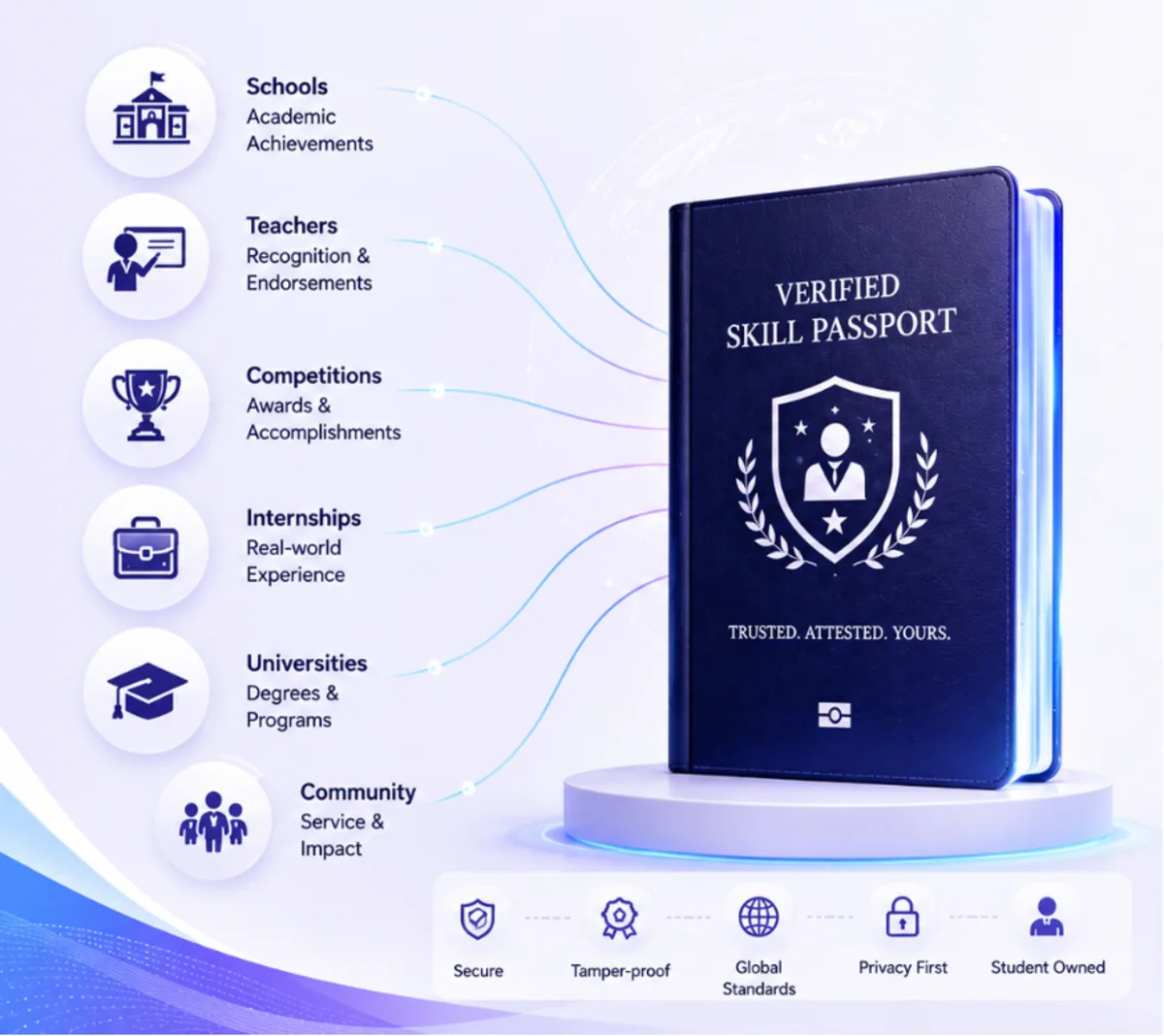
SkillStory’s Skill Passport is designed to support exactly this journey — from project to evidence to skills to credential to a portable learner record.
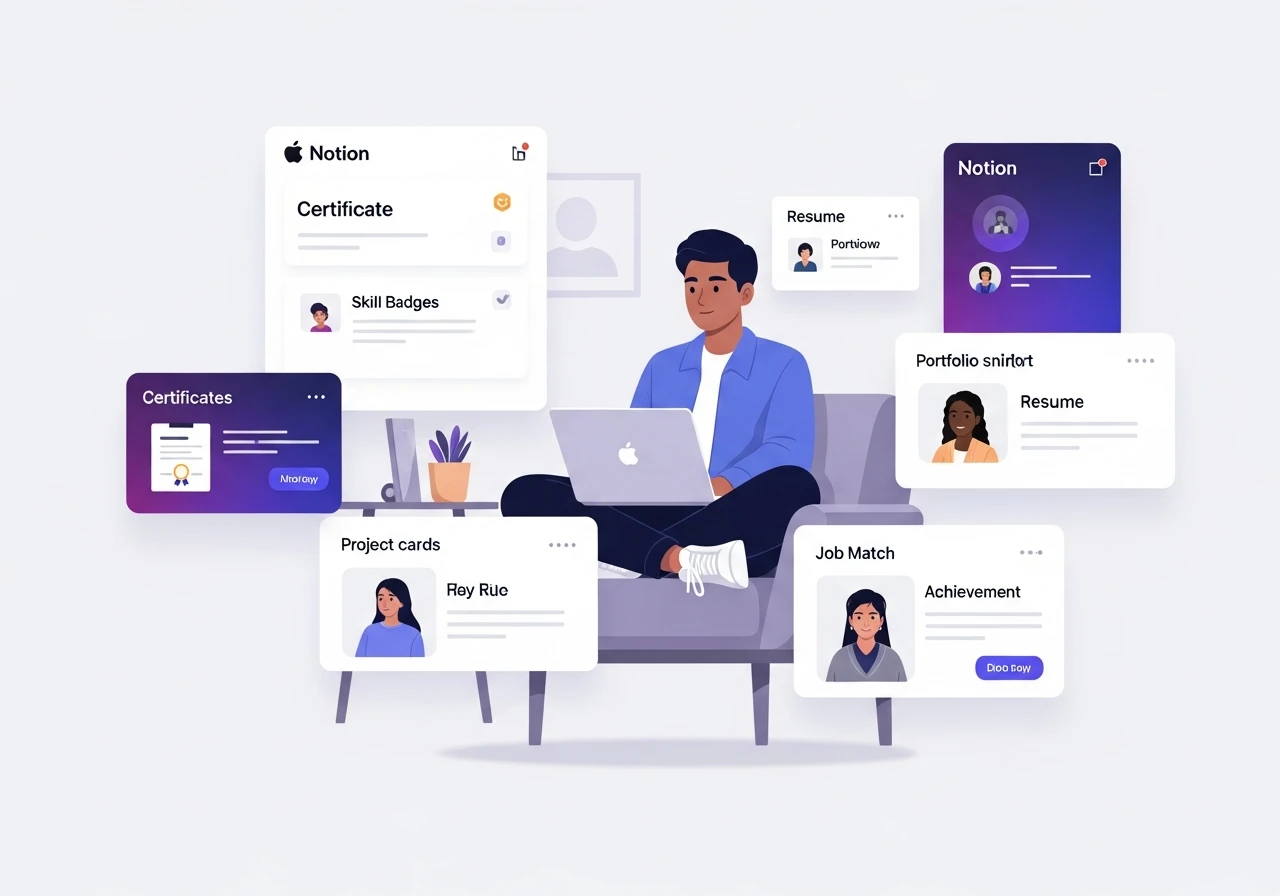
Students can document their work, attach evidence, receive teacher attestations and build a structured record that grows with them from school into career.
For schools, SkillStory’s School License provides the infrastructure to embed this into existing processes — making skill-aligned credentialing part of how the school recognises achievement rather than an additional administrative burden.
The AI chatbot project happened. The skills were demonstrated. The evidence exists.
The only question is whether the record captures it.